
Little Wings Charity Forced to Cut Sick Children’s Flights by 57% as Fuel Crisis Deepens
21 April 2026Parents Are Giving Up Children They Can't Feed: Australia's Food Charities Reject 70,000+ People Every Month
Last updated: 24 April 2026
Food charities across Australia are rejecting more than 70,000 people every month-unable to meet unprecedented demand as the cost of living crisis pushes thousands of families into food poverty for the first time.
The choice no parent should ever have to make: feed your child, or keep them.
Across Australia, families are making that impossible decision right now. Not because they want to. Because they have no other option.
James Goth, CEO of OzHarvest, revealed this week what many Australians don't want to believe is happening: parents are placing their children into foster care because they cannot afford to feed them.
Not temporarily. Not as a last resort while they get back on their feet. Permanently. Because the cost of keeping a child fed, clothed, and sheltered has become impossible.
And the charities that once caught these families before they fell? They're turning people away. Not because they don't want to help, but because they physically cannot keep up with demand.
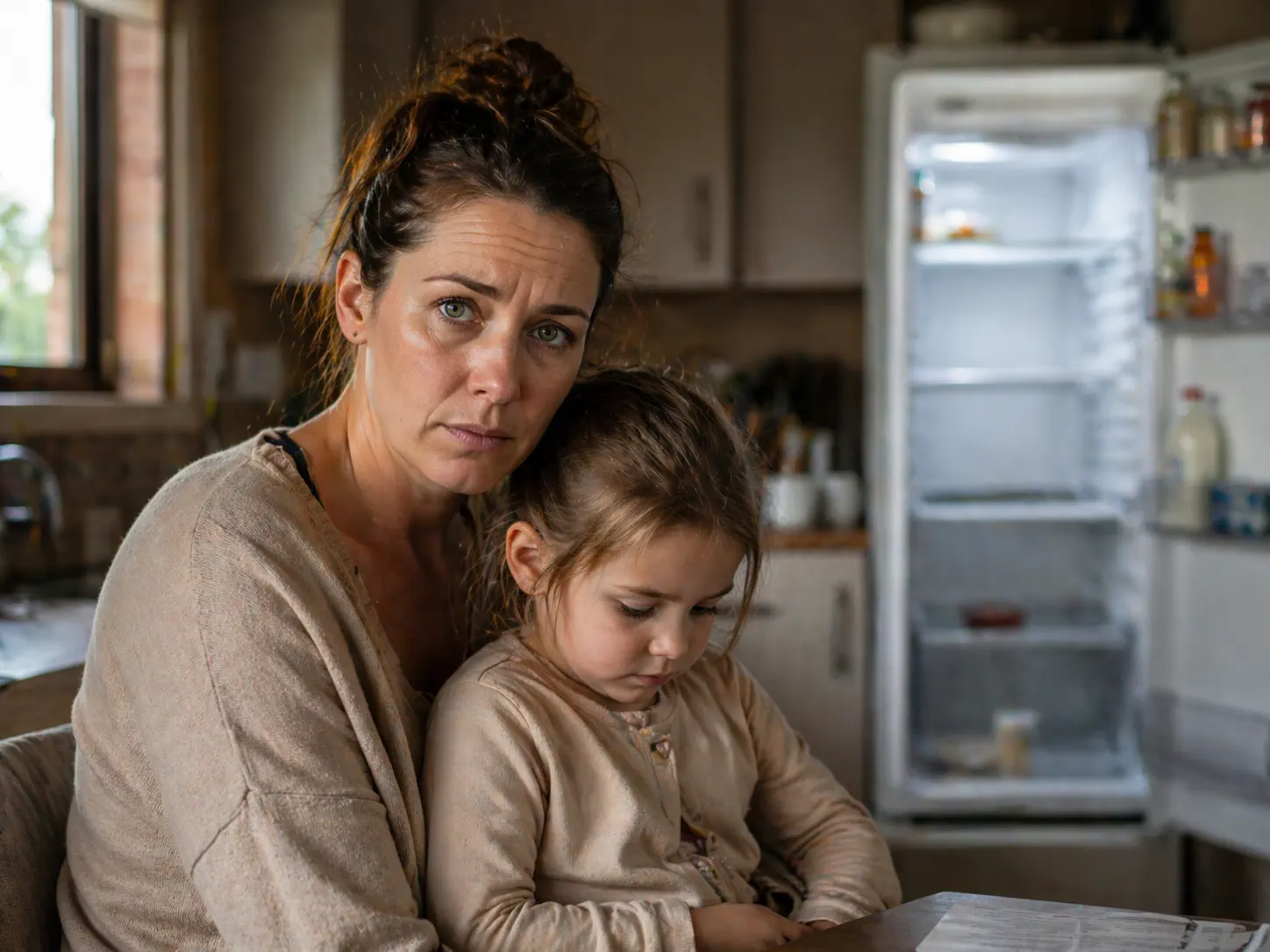
The Devastating Reality: Children Entering Foster Care Due to Food Poverty
"We're talking about a lot of people who are farmers, who work the land and nourish our nation," James Goth explained in recent media coverage. "They're dealing with a professional fuel crisis in terms of diesel and access, in addition to caring for a sick child and trying to get them to treatment."
But the crisis extends far beyond farmers. It's hitting every Australian household struggling with the cost of living.
According to OzHarvest's 2026 Frontline Report-the country's most comprehensive survey of frontline food relief organisations-demand for food relief is rising across every state and territory, with devastating ripple effects for children.
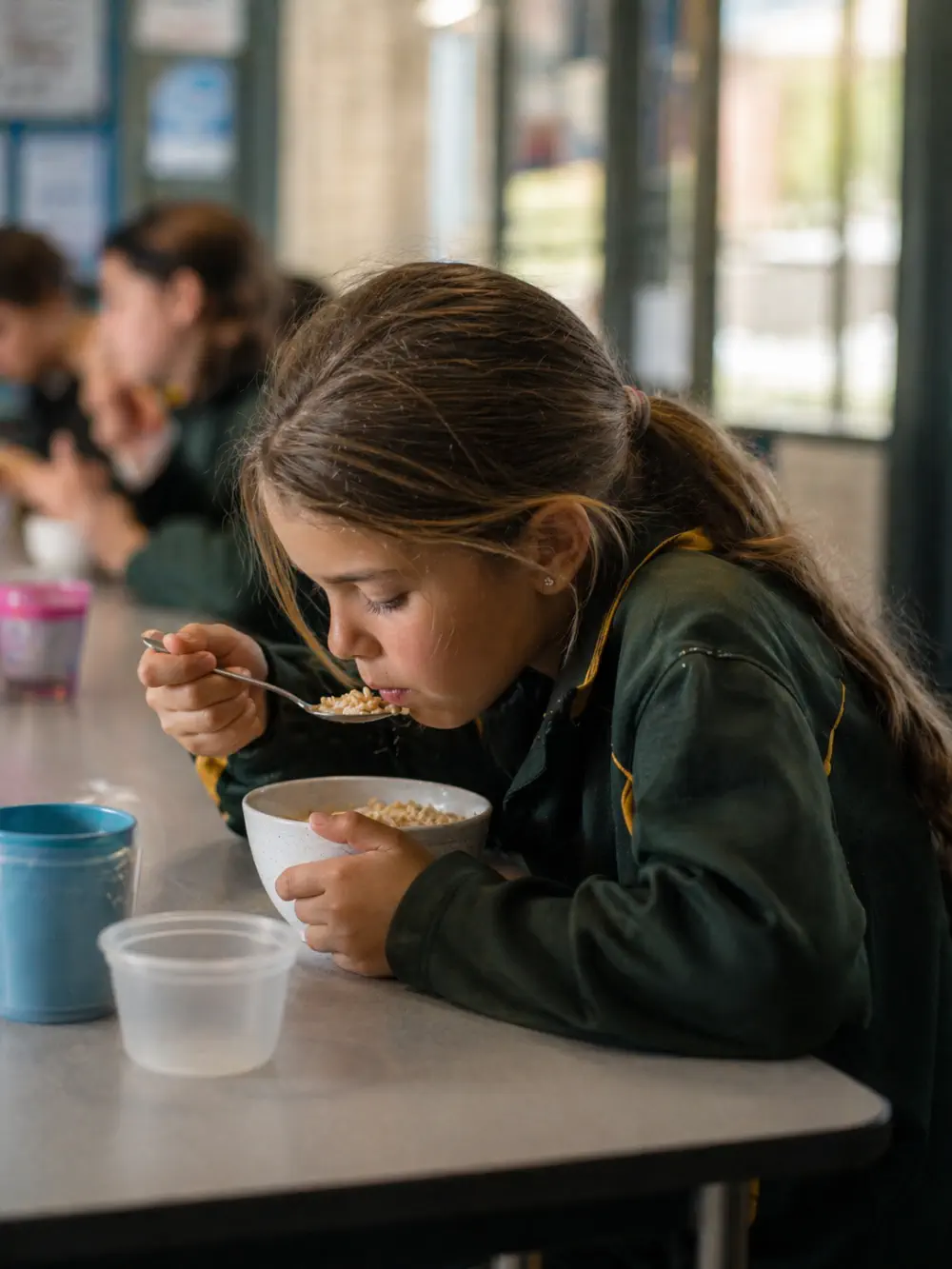
Teachers are buying food from their own pockets so students can get through the day. Parents keep children home rather than send them to school without lunch, experiencing unbearable shame. Breakfast clubs report kids eating with urgency because the next meal cannot be assumed.
"For many children, school has become the most reliable place to eat."
— James Goth, CEO OzHarvest
This should not be normal. But across Australia, it's becoming the new reality.
OzHarvest Frontline Report 2026: The Numbers Behind the Crisis
Released this week, OzHarvest's 2026 Frontline Report surveyed 875 food relief organisations across every Australian state and territory except the Northern Territory.
The findings paint a stark picture:
More than 70,000 Australians are turned away from food support every single month. Not because charities don't want to help them, but because the system is completely overwhelmed.
More than one in three people (36%) seeking help are doing so for the first time in their lives. These aren't people who've relied on charity before. They're mortgage holders, dual-income households, families who thought they were financially secure-until they weren't.
Charities are overwhelmed with demand in every state and territory. Two-thirds report they do not have enough food to meet current demand.
Last year alone, OzHarvest delivered more than 35 million meals to 1,500 charity partners, including 240 schools across Australia. But even that massive effort isn't enough.
"Our Frontline Report is reinforcing what community workers, teachers and volunteers are seeing every day. Demand for food relief is rising, and charities are overwhelmed with demand. The warning lights are flashing everywhere."
— James Goth, CEO OzHarvest
OzHarvest isn't responding to a short-term spike in need. This is sustained pressure on families who have run out of room to absorb rising costs.
What's Driving This Crisis?
The factors compounding Australia's food insecurity crisis are interconnected and relentless:
Fuel Costs Soaring
Global instability, driven by conflict in the Middle East, has seen fuel costs surge sharply. These increases flow directly through to transport, freight, and logistics costs for food relief organisations.
For charities operating across Australia's vast geography, the cost and complexity of servicing regional and remote communities has become nearly impossible to manage.
Cost of Living Crushing Families
Rent, utilities, childcare, fuel-every essential cost has risen. Families are forced to choose between paying bills and buying groceries. Food is often the first thing cut from the budget because it's the most flexible expense.
According to the Australian Bureau of Statistics, 1 in 8 Australian households experienced food insecurity in 2023-the first nationally representative data in a decade.
Inadequate Government Support
With less than 10% of operational costs covered by government funding for most food charities, these organisations are almost entirely dependent on donations and volunteers.
When demand doubles or triples, funding doesn't automatically increase with it.
State-by-State: Who's Responding?
Western Australia: $3.8 Million Support Package
On April 18, 2026, the Western Australian Government announced a $3.8 million support package to sustain food relief services amid the fuel price surge.
The package includes:
$1.5 million in targeted funding for major food relief providers-$500,000 each allocated to Foodbank, OzHarvest, and SecondBite-to offset escalating freight and logistics costs.
$2.3 million grants pool, administered by the Western Australian Council of Social Service (WACOSS), to support community organisations already delivering food relief services and facing rising operational costs.
"Food relief organisations provide an essential service to people doing it tough, so this is about giving them certainty to continue that work in these challenging times."
— Rita Saffioti, WA Treasurer
South Australia: Two-Thirds of Charities Need More Food
According to the OzHarvest report, 69% of South Australian charities are reporting increasing demand for services, with two in three saying they do not have enough food to meet demand.
32% of South Australians seeking food relief are doing so for the first time, including mortgage holders and double-income households.
Queensland: Charities Buckling Under Pressure
Queensland charities are buckling under a surge in demand as thousands of desperate families are turned away from food relief every month.
Other States: Where's the Response?
At the time of writing, New South Wales, Victoria, Tasmania, and the ACT have not announced similar support packages for food charities.
The question remains: will other states follow WA's lead, or will charities be left to manage this crisis alone?
Who's Most Vulnerable to Food Insecurity?
According to Australian Bureau of Statistics data from 2023, certain populations are significantly more vulnerable to food insecurity:
Lone parent families with dependent children: 34% experiencing food insecurity
Group households: 27.8% experiencing food insecurity
Aboriginal and Torres Strait Islander peoples: 22% living in households where someone went without food
Unemployed individuals: 23% experiencing food insecurity
Renters: 20% experiencing food insecurity (compared to less than 3% for homeowners)
These aren't just statistics. They represent real people-single parents working two jobs who still can't afford groceries, Indigenous communities facing systemic disadvantage, young people in share houses struggling with rising rents.
The data reveals a harsh truth: in one of the world's wealthiest nations, your likelihood of going hungry depends heavily on factors often beyond your control-your employment status, your housing situation, your family structure.
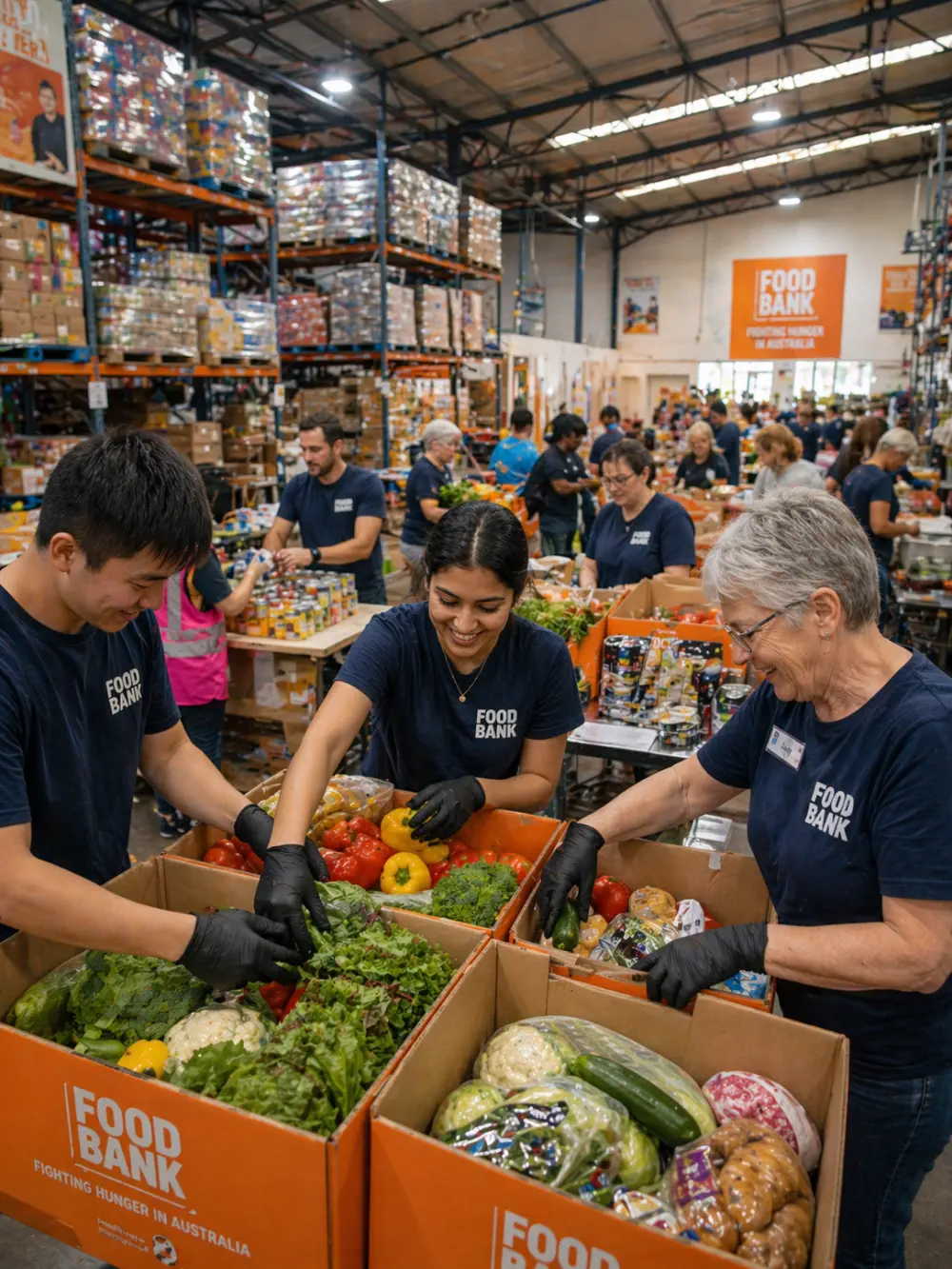
Foodbank Australia: Feeding the Frontline
Foodbank Australia, the country's largest hunger relief charity, supplies more than 2,950 charities nationwide and provides regular breakfasts for students in 2,890 schools across Australia.
According to Foodbank's 2023 Hunger Report, 77% of households experiencing food insecurity were doing so for the first time-corroborating OzHarvest's findings that this crisis is hitting previously secure families.
CEO Brianna Casey has emphasized that maintaining a constant supply of staples like pasta, rice, and canned goods is vital to ensure everyday Australians struggling right now can put a meal on the table.
But even Foodbank, with its massive national network and infrastructure, is struggling to keep pace with demand.
The charity operates on donations from the food and grocery sector-surplus stock that doesn't meet industry specifications, is close to expiry, or is excess to requirements. When demand surges but donations don't increase proportionally, the gap widens.
Australia's National Food Security Strategy: Is It Enough?
In response to these challenges, the Australian Government has committed $3.5 million to develop Feeding Australia: A National Food Security Strategy.
From February to June 2026, a series of co-design workshops are being held across Australia in capital cities, regional and remote areas, bringing together stakeholders from across the food system-industry, community, academia, charities, and government.
The strategy adopts the Food and Agriculture Organization (FAO) definition of food security, which recognizes six interconnected pillars: availability, access, utilisation, stability, agency, and sustainability.
The Department of Agriculture acknowledges that "food security is not a given for many Australians dealing with cost-of-living pressures" and recognizes that "food abundance masks uneven access and equity."
But here's the problem: strategy development takes time. Co-design workshops, stakeholder consultations, policy frameworks-these are important, necessary processes. But they won't feed a family tonight.
Food relief organisations need emergency surge funding now to respond to immediate pressure spikes, as well as stronger, sustained investment so that no one seeking help is turned away.
"Food relief, while not the solution to long-term food security, is a critical social support service which stabilises households in crisis. It must be properly recognised and resourced by the federal government."
— James Goth, CEO OzHarvest
The question isn't whether Australia needs a National Food Security Strategy. It's whether that strategy will arrive in time to prevent the system from collapsing entirely.
How You Can Help
The scale of this crisis can feel overwhelming, but there are concrete actions you can take right now to make a difference:
Donate to Food Relief Organisations
Every dollar helps. OzHarvest operates on the principle that $1 = 2 meals delivered to people in need.
OzHarvest: ozharvest.org (tax deductible)
Foodbank Australia: foodbank.org.au (tax deductible)
SecondBite: Rescues surplus fresh food and redistributes to charities
Volunteer Your Time
Food charities rely heavily on volunteers. Whether you can commit a few hours a week or a full day monthly, your time matters.
OzHarvest has over 3,000 passionate volunteers who rescue food, pack hampers, and deliver meals.
Advocate for Government Action
Contact your local, state, and federal representatives. Ask them:
• What is being done to support food charities facing unprecedented demand?
• Will your state follow WA's lead with targeted funding?
• How will the National Food Security Strategy address immediate need?
Support Local Community Organisations
Many smaller charities and community groups are also struggling. Find local food banks, community kitchens, and meal programs in your area and see how you can help.
Raise Awareness
Share this article. Talk about food insecurity with your networks. The more people understand the scale of the crisis, the more pressure there is for systemic change.
Explore more ways to support Australians in need through Helptia's charity directory and discover volunteer opportunities across Australia.
Related Food and Community Support Charities
If you're looking to support organisations addressing food insecurity and community welfare across Australia, explore these resources:
Social Welfare Charities - Browse organisations supporting vulnerable Australians with essential services including food relief, housing support, and emergency assistance.
Children's Charities - Find charities working to ensure children have access to nutrition, education, and safe environments.
Family Support Charities - Discover organisations helping families navigate financial hardship and access critical support services.
All Australian Charities - Search Helptia's directory of over 4,900 ACNC-registered charities by cause, location, or type of support.
At Helptia, we maintain Australia's largest independent charity directory, making it easier for Australians to find and support causes that matter to them.
Sources and Further Information
This article is based on verified sources and official data from government agencies, food relief organisations, and media coverage from April 2026:
OzHarvest Official Website: ozharvest.org
OzHarvest 2026 Frontline Report Coverage: Canberra Times (April 2026)
Foodbank Australia: foodbank.org.au
WA Government Media Statement: $3.8M Food Relief Support Package (April 18, 2026)
Department of Agriculture, Fisheries and Forestry: Feeding Australia: A National Food Security Strategy
Australian Bureau of Statistics: Food Insecurity Statistics (2023)
InDaily South Australia: SA Charities Forced to Turn Hungry Away (April 23, 2026)
All quotes and statistics verified through official sources. Article last updated 24 April 2026.
Without urgent action, the food relief system that millions of Australians depend on may collapse entirely-leaving families with nowhere to turn when they can no longer afford to feed themselves or their children.
Parents giving up kids they can’t feed. 70,000 rejected monthly. Charities overwhelmed. Schools now most reliable meal source. Australia’s food crisis deepens.